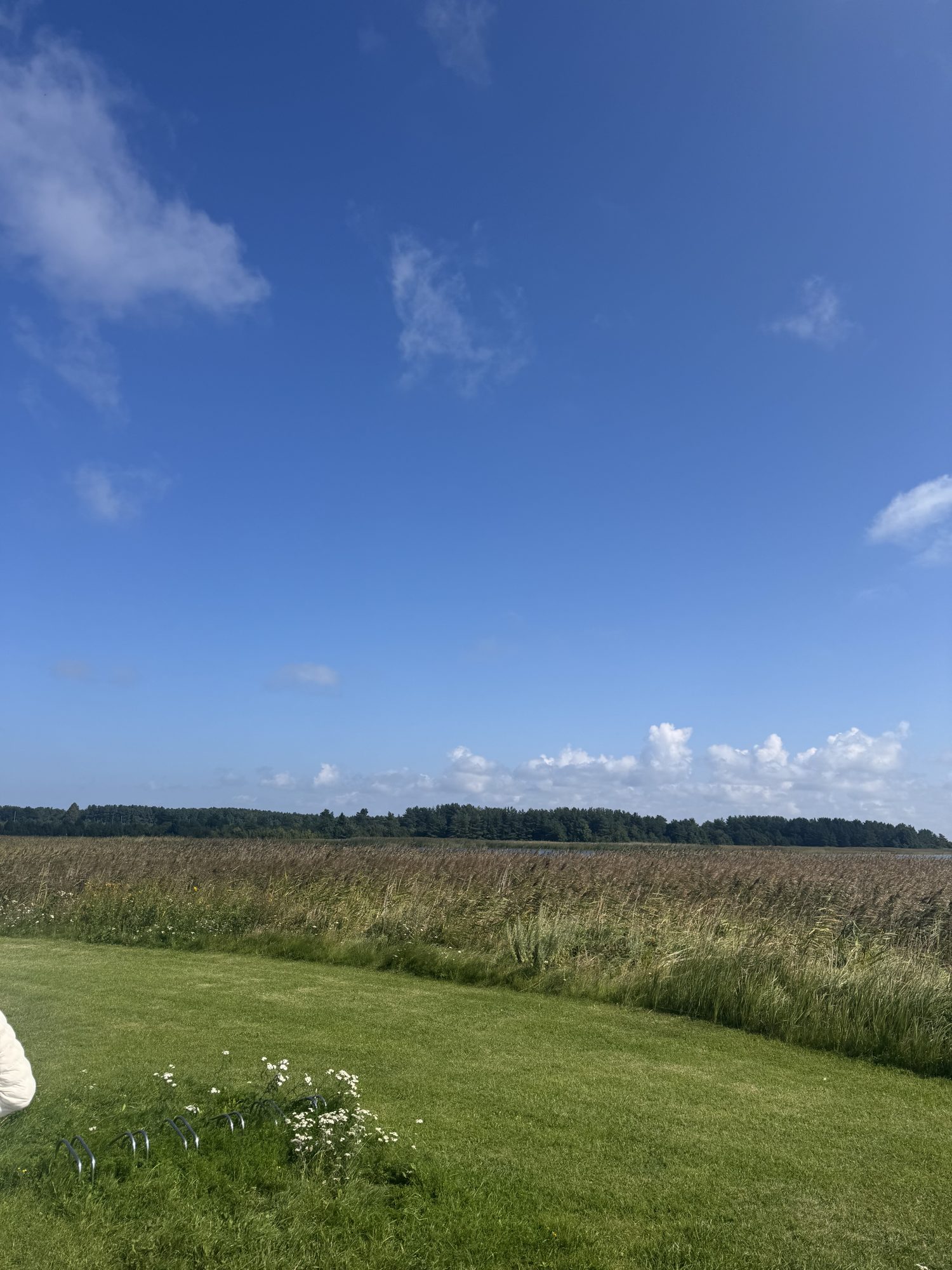
EstoniaMy favorite trip so far: Estonia (pictured is the island of Vormsi!)
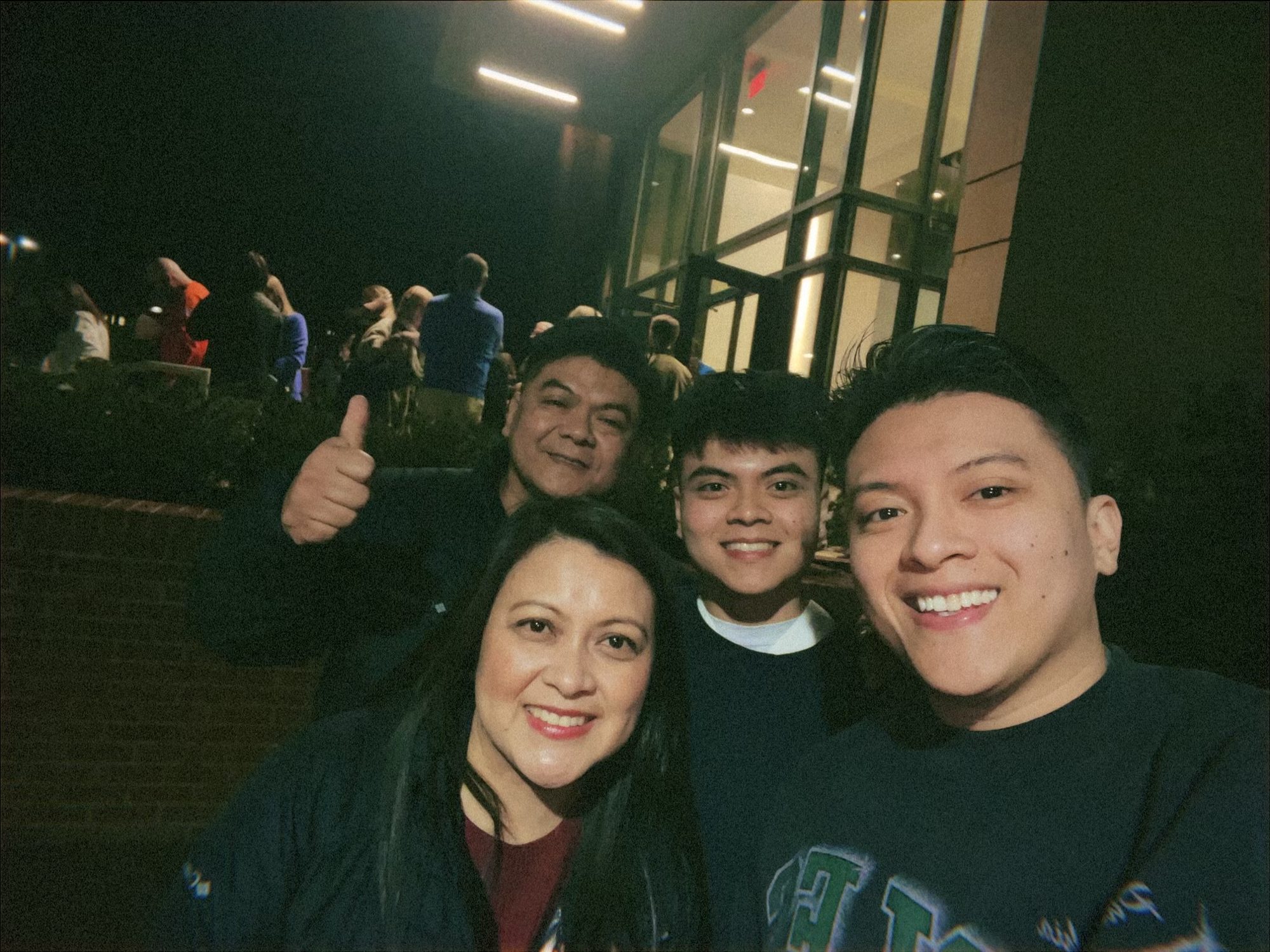
HomeMe and my partner in crime while building cool stuff
03 — Journey
Journey.
Where I've lived so far, drawn to scale by age.
Hawaii & LA
South Carolina
DC
Evanston
Age 0
15
22
26
Now
Chapter 01 · Hawaii & CaliforniaAge 0–15
Hawaii & Los Angeles
Born in Hawaii and grew up in LA as the son of first-generation immigrants. We were taught to make the most of what we have, and that self-starter attitude and drive has kept me going to this day!
Chapter 02 · South CarolinaAge 15–22
Clemson University
Studied chemical engineering, with a passion for learning about innovative work in mass transfer and drug delivery.
Chapter 03 · Washington, DCAge 22–26
Strategy Consultant
Moved to Washington, DC as a Strategy Consultant at Deloitte Consulting serving public sector clients. I led digital transformations for Massachusetts and Georgia while also building AI-native consulting workflows that span the entire engagement lifecycle.
Chapter 04 · Evanston, IllinoisAge 26–Now
Kellogg MBAi
Now in the MBAi cohort at Northwestern (MBA plus a degree in AI, finishing March 2028). I'm focused on strategy & operations, product strategy, and product management.
04 — Things I've built
Projects.
Both of these are live demos. Click around.
App · Student wellbeing
Reserve
Reserve helps students keep their health and wellbeing a priority when the schedule gets hectic. Every commitment costs energy, so you can see when you're overdrawn before you burn out, and the time you set aside for yourself stays protected.
ProductWellbeingBuilt with AI
Try it: plan a day →
Tuesday · Energy budget2of 10 left
Are you sure?
Reserved: gym & dinnerProtected
Tool · Built with Claude
Resume Redline
Paste in a job description and Resume Redline picks the best bullets from my experience bank, rewords them to match the role, and shows every change as a redline you can approve. It also researches the company and drafts a cover letter. I built it for my own search, and I'm now building it out so anyone can use it to make their job search better.
AIRecruitingTooling
Try it: pick a role →
Keywords from the posting
Match
0%
Demo using two real bullets from my resume. Numbers and facts never change, only the wording.
05 — Writing
Essays.
Notes on product, AI, and the people who build things.
Product
The ring that sent me to the doctor
Oct 2026
My favorite product is my Oura Ring. It has no screen and doesn't send notifications, and it's the reason I found out I have high cholesterol.
What happened
I bought the ring in December 2024. Honestly, I bought it because I wanted to keep wearing actual watches. Oura did a good job reaching people like me, who care about their health but don't want a Spy Kids looking watch on their wrist.
After wearing it for a while, I noticed my blood pressure readings on the Oura app trended abnormal. In mid-2025 I made an appointment with my doctor to talk about them, and that conversation is how we found out my cholesterol was high. I'm on medication for it now. Without the ring, I don't think I would have gone in until I felt sick, which would have been way too late.
Why I like it so much
The ring collects data day and night and leaves me alone until I decide to look. Because it tracks every day, I walked into my doctor's office with far more readings than a yearly physical would show.
What I learned in health consulting
In my health consulting work, I learned that good recommendations and sound policy decisions start with good data. For the state of Massachusetts, discrepancies in people's health data led to system errors, and those errors could cause problems further downstream that kept people from getting timely and accurate care.
I think the same is true for one person's health. Most people don't see a doctor until they feel bad, and by then some of the easier fixes may be gone. A ring that tracks you every day gives you and your doctor better data to work with, and it gives it to you earlier.
The price needs to come down
The ring costs hundreds of dollars, plus a monthly membership. Someone without a regular doctor, or someone with a condition they haven't found yet, would get a lot out of one, and those are often the people least able to pay for it. I'd like to see cheaper versions, and I'd like insurers and employers to help cover the cost.
The ring got me to make the appointment, and my doctor figured out the rest. I think it could do the same for a lot of people who don't know yet that they should go.
AI
My hopes and worries about AI
Oct 2026
I think about AI a lot. I helped architect AI-native consulting workflows at my firm, and now I'm the AI Academic Chair in Kellogg's MBAi program. I'm optimistic about it overall, but I also have a couple of worries.
What excites me
I'm most excited about how many more people can now build and do things that used to require special training.
I studied chemical engineering. A few years ago, building a working software tool would have meant learning to code or paying someone to do it. I built Resume Redline with Claude. It reads a job description, picks the best bullets from my experience, and suggests edits I can approve one at a time. Me building an app would have been impossible just 5 years ago, but now, all it takes is an idea and some time.
I also think about the people this helps beyond me. A student without a tutor can ask for a concept to be explained again and again until it makes sense. A first-generation college student (like myself) can get help with applications their parents never had to fill out. For a long time, that kind of help depended on who you knew or what you could pay for, and that's starting to change.
What worries me about learning
I worry about kids growing up with AI doing their thinking for them. Learning usually involves being stuck for a while, you stare at a blank page, or you work a problem the wrong way before you figure it out, and that's how the skill gets built. If a tool skips that part every time, I don't think the skill develops.
We need schools to teach students when to use AI and when to work through something on their own. Right now it's easy to drift into letting it do everything.
What worries me about work
In corporate America, AI has made long documents almost free to produce. Writing a long document used to take a lot of time, and a one-page memo meant someone had done the work of deciding what mattered. Now ten pages take about as much effort as one, so people send ten pages.
The effort moves to whoever has to read it. On one call, we spent 30 minutes clicking through a ten-page clickable HTML file in small text. In a meeting where being brief matters, that was painful. The work of pulling out what mattered got handed to everyone on the call, when it would have been much more effective to synthesize it into a classic, old-fashioned deck.
Where I land
I'll keep building with AI, and I want more people to have access to it. I think the healthy way to use it is to do your own thinking first and bring AI in afterward to improve the work. Also, for the first time in human history, creation is becoming cheaper than consumption – as a result, I believe brevity is the currency of effective knowledge transfer.
Community
Hot take: go to the birthday party
Oct 2026
I care a lot about mental health, and I'm glad people talk about it openly now. However, I also think "protect your peace" has turned into a reason to skip the things that keep friendships and communities going, and I think we've taken it too far.
Community takes contributions
The friends who show up for you when things go wrong are usually people you've shown up for before. That trust gets built in small, inconvenient moments, like a birthday dinner on a weeknight or coffee with a friend having a hard time when you'd rather stay home.
If you only show up when you feel like it, you're taking from a community without adding much to it. That works for a while but it gets harder when you need people and haven't been around for them.
Going when you don't feel like it
When you go even though you're tired or the drive is long, people notice, and it means a lot to them! If you're struggling, rest is the right call, and good friends will understand, but being out of the mood is a different situation, and I think we've started treating the two the same way.
During my consulting career, I had a grueling day that ran into the evening, and it happened to be my weekly board game night with friends. I did not want to go. My roommate, who's also in the group, eventually convinced me. When we got there, I found out one of our friends had gone through a tough breakup the night before - he needed the night to get his mind off of it, and I'm so glad I went to be there for him.
When I think about an energy budget, I think about where my energy goes, and the people in my life are near the top of that list. A friend's birthday is a good place to spend some of it, even on a tired day.
Next time
Next time a friend has a birthday and you're tired, go anyway. Stay for an hour if that's all you have, and say happy birthday in person!
06 — Contact
Let'stalk.
I'm recruiting for summer 2027 internships in strategy & operations, product strategy and product management. I'd love to hear from you, whether it's about a role, AI, or something you're building.